
Description
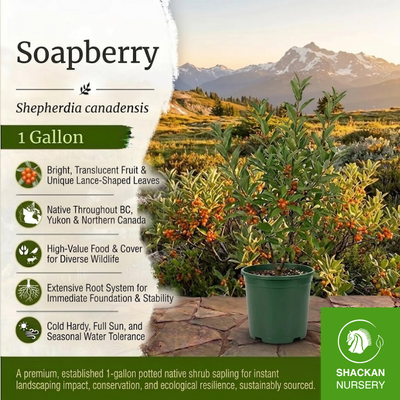
Soapberry
Scientific Name: Shepherdia canadensis
Add a hardy, culturally important native to your landscape with Soapberry (Shepherdia canadensis), found throughout British Columbia. Its tart red berries have long been whipped into a traditional treat known as Indian ice cream.
Soapberry is well adapted to the dry, well-drained soils of Interior BC and fixes nitrogen to improve poor ground. Its silvery-backed leaves, small flowers, and bright berries make it excellent for edible landscapes, pollinator gardens, and restoration.
Growing naturally on open slopes, forest edges, and dry ground, this nitrogen-fixing shrub enriches soil, feeds pollinators and wildlife, and provides a treasured traditional harvest.
Features
- Native to British Columbia and much of Canada
- Tart red berries used in traditional foods
- Fixes nitrogen and improves poor soils
- Silvery-backed drought-tolerant foliage
- Early spring flowers for pollinators
- Supports birds, bears, and wildlife
- Ideal for edible, pollinator, and restoration plantings
Growing Information
Mature Height: 1 to 3 m (3 to 10 ft)
Spread: 1 to 2.5 m (3 to 8 ft)
Light Requirements: Full sun to partial shade
Soil Requirements: Dry, well-drained soils
Moisture Requirements: Low
Hardiness Zone: 2 to 7
Ecological Benefits
Soapberry fixes atmospheric nitrogen, enriching poor soils and supporting other plants, while its early flowers feed pollinators and its berries feed birds, bears, and small mammals. This drought-tolerant, culturally significant species supports pollinator habitat, restoration, and edible plantings.
Please note: As a native plant, size and appearance may vary depending on the season and stage of growth.




Reviews
There are no reviews yet.