
Description
Barclay’s Willow
Scientific Name: Salix barclayi
Restore your wet ground with Barclay’s Willow (Salix barclayi), a hardy native shrub willow found throughout British Columbia. Fast-rooting and resilient, it is a reliable choice for streambanks, wetland edges, and restoration plantings.
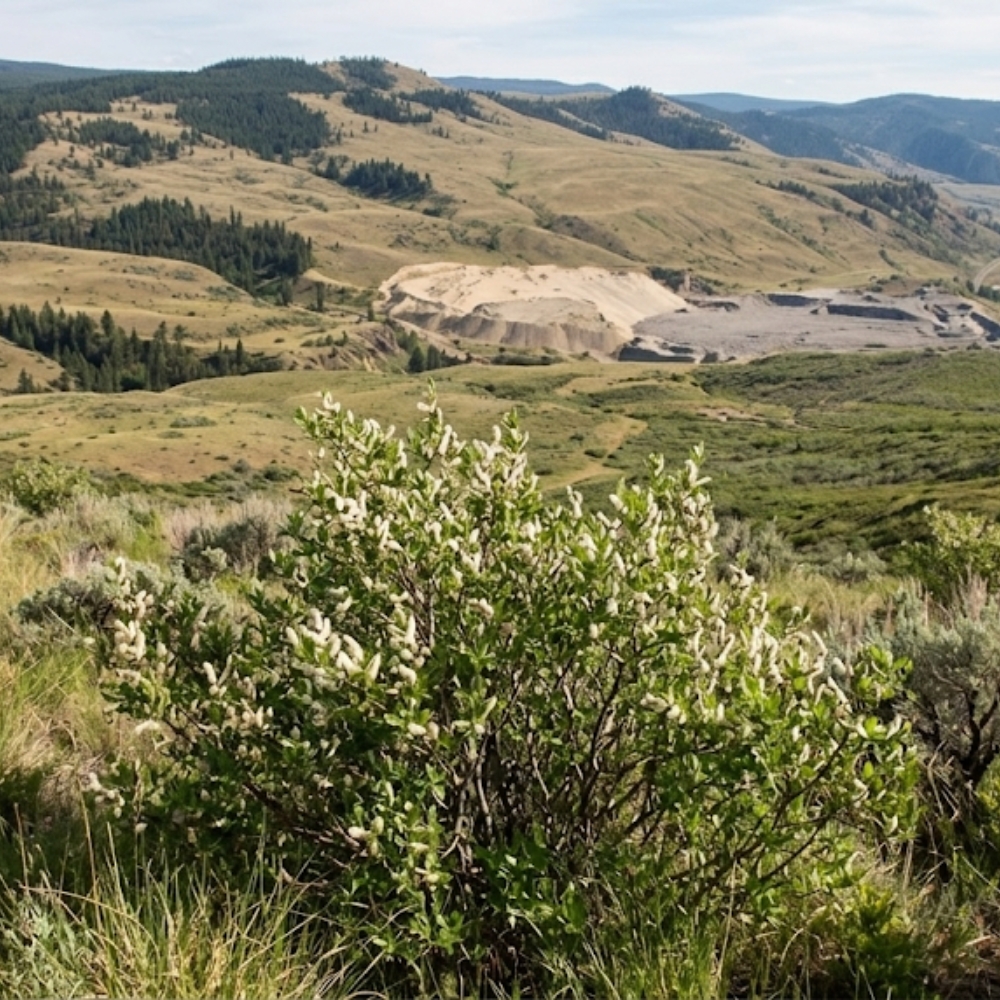
Barclay’s Willow is well adapted to the moist soils of Interior BC and grows across a wide elevation range, from the steppe and montane zones up to the alpine. Its glossy green leaves, early catkins, and vigorous root system make it excellent for erosion control, live staking, and rebuilding disturbed riparian areas.
Growing naturally in moist thickets, fens, shores, and forest openings, this adaptable willow provides fast, dependable cover for healing damaged shorelines and is common throughout most of the province.
Features
- Native to British Columbia and common throughout most of the province
- Grows from steppe and montane zones to the alpine
- Early catkins support emerging pollinators
- Strong, spreading roots for erosion control
- Thrives in moist thickets, fens, and shorelines
- Excellent for streambank stabilization
- Ideal for watershed and wetland restoration
Growing Information
Mature Height: 1 to 3 m (3 to 10 ft)
Spread: 1 to 3 m (3 to 10 ft)
Light Requirements: Full sun to partial shade
Soil Requirements: Moist to mesic soils, thickets, fens, and shores
Moisture Requirements: High
Hardiness Zone: 2 to 6
Ecological Benefits
Barclay’s Willow provides some of the earliest pollen and nectar of the season for native bees and other pollinators. Its dense roots stabilize banks and reduce erosion, while its cover and browse support birds, insects, and wildlife. Like all willows, this species is dioecious, with male and female catkins borne on separate plants. It is a key species for watershed restoration and riparian planting.
Please note: As a native plant, size and appearance may vary depending on the season and stage of growth.


Reviews
There are no reviews yet.