
Description
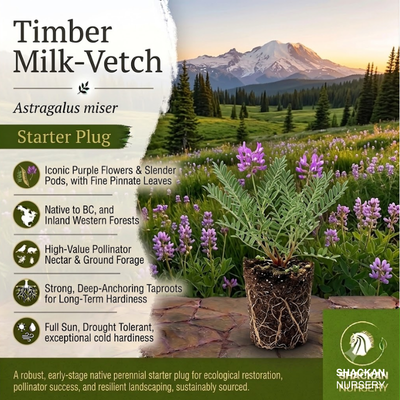
Timber Milkvetch
Scientific Name: Astragalus miser var. serotinus
Timber Milkvetch is a low-growing native plant found across the southern Interior of British Columbia. It grows naturally in dry grasslands and open forests. Its fine foliage and small, pea-like flowers add subtle colour and texture to native plantings.
This hardy plant grows well in the dry, well-drained soils of Interior BC. In addition, its pink to purple flowers provide food for native bees and other pollinators. It may suit pollinator gardens and grassland restoration projects where livestock cannot access the site.
Important Safety Warning
Timber Milkvetch is toxic to livestock. Therefore, it must not be planted in pastures, rangelands, paddocks, or areas grazed by cattle or horses. Please review the safety information below before choosing this plant.
Key Features
- Native to the southern Interior of British Columbia
- Produces small pink to purple flowers
- Features fine, delicate foliage
- Tolerates drought and dry soil
- Provides nectar and pollen for native bees
- Supports grassland restoration on non-grazed sites
- Not suitable for pasture, rangeland, or livestock areas
Growing Information
Mature Height: 10 to 40 cm (4 to 16 in)
Spread: 20 to 40 cm (8 to 16 in)
Light: Full sun to partial shade
Soil: Dry, well-drained grassland or open forest soil
Moisture: Low
Hardiness Zones: 3 to 7
Ecological Benefits
Timber Milkvetch adds plant diversity to dry grasslands and native gardens. Its flowers also provide nectar and pollen for bees and other beneficial insects. As a result, it can support pollinator habitat on carefully selected sites.
Livestock Safety
Timber Milkvetch contains miserotoxin, a natural compound that is toxic to livestock. It is one of the most significant poisonous plants found on rangelands in the southern Interior of BC.
Cattle poisoning is well documented in the region. The condition is sometimes called timber milkvetch poisoning or Kamloops cattle disease. Research from the Kamloops range station recorded average annual cattle losses of about 3 to 5 percent in affected areas. However, some ranges reported higher losses. Lactating first-calf heifers may face the greatest risk. Toxin levels may also be higher in fescue grassland areas.
For these reasons, never plant Timber Milkvetch in pasture, rangeland, or any location where cattle or horses may graze.
Please note: Native plants can vary in size and appearance depending on the season and their stage of growth.



Reviews
There are no reviews yet.